Coaching
How Much Does CrossFit Coaching Cost? An Honest Price Guide
Coaching prices are the worst-kept secret in fitness — mostly because almost nobody publishes them. This guide puts numbers on the page: the typical ranges, what drives them, the red flags at both ends, and exactly what I charge.
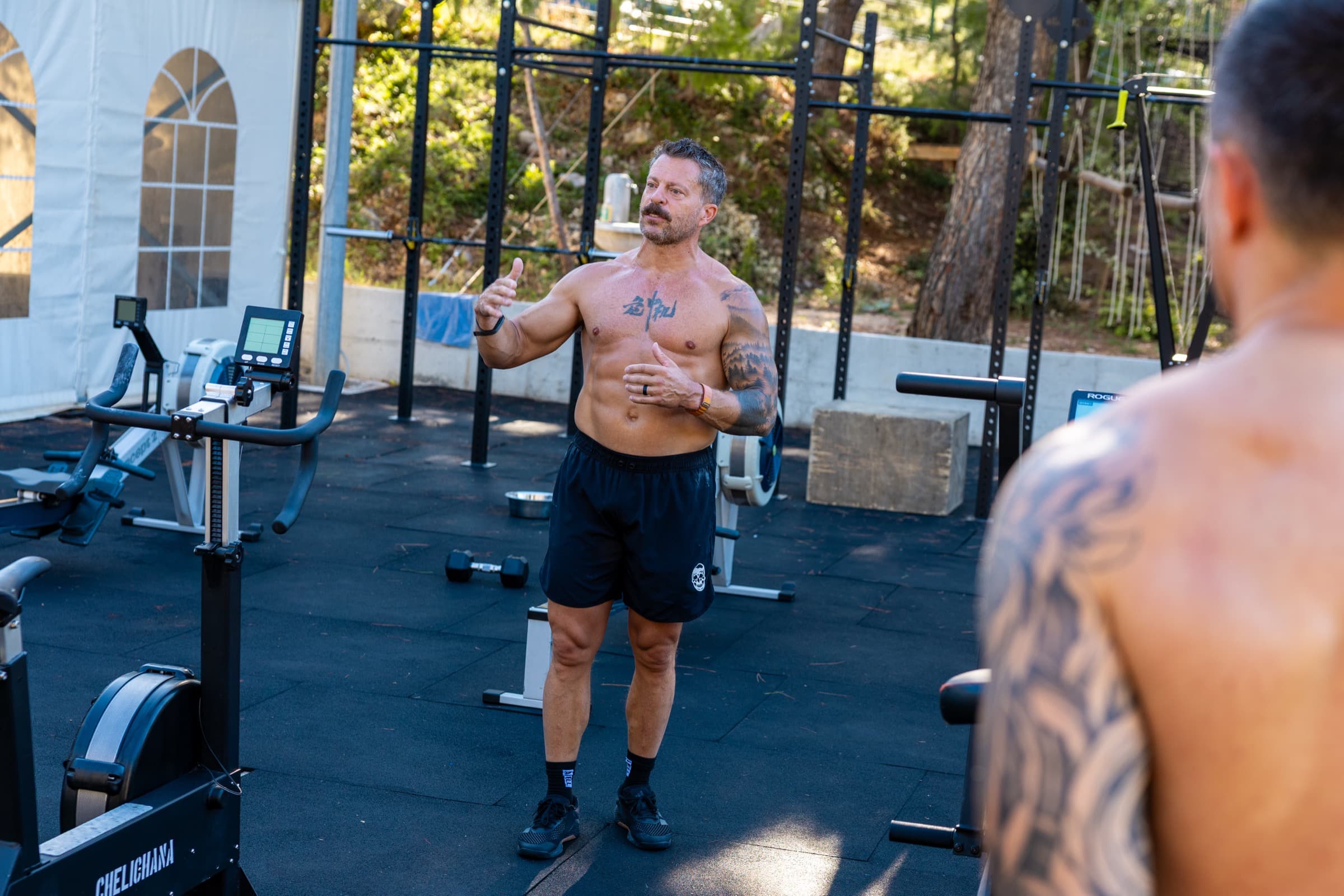
You can find a hundred coaching websites that say “book a call to discuss investment” and almost none that put a number on the page. If you're shopping for a coach, you should be able to comparison-shop like an adult. So here is the whole market, as honestly as I can lay it out — including my own prices, on the record.
The short answer: four tiers, four prices
| What it is | Typical monthly cost | What you actually get |
|---|---|---|
| Group programming (follow-along) | $30–$60 | A proven program, a community, no individualization |
| Semi-custom / small-group coaching | $100–$250 | A template adjusted for you, periodic check-ins, shared coach attention |
| True 1:1 remote coaching | $300–$600+ | Programming written for your body, your equipment, your schedule — with regular coach feedback and adjustment |
| In-person personal training | $60–$100+ per session | A coach physically present; priced per hour, so 3x/week quickly passes $1,000/month |
Everything below explains why those ranges are so wide — and which tier actually matches your goal.
What you're actually paying for
Price differences in coaching aren't random. Five things drive them:
1. Individualization
A program written for a 50-year-old is cheap to deliver. A program written for you — your shoulder history, your home gym, your travel, your competition date — has to be built and rebuilt by a human every week. That's the single biggest price driver, and it's binary: either someone is doing that work or they aren't.
2. Feedback frequency
Does a coach watch your training videos and adjust, or do you get a PDF and a prayer? Daily and weekly feedback loops cost coach hours. Monthly check-ins cost fewer. The price usually tells you which one you're getting — ask anyway.
3. Who the coach is
A coach's own competitive record isn't everything, but it isn't nothing either. Someone who has stood where you want to stand — and coached others there — charges for pattern recognition you can't get from a certification weekend.
4. Nutrition
Training-only coaching and training-plus-nutrition are different products. Real nutrition coaching — targets, adjustments, accountability — is a second service, and it's usually priced like one.
5. Access
Can you reach your coach when your back tweaks out on a Tuesday, or is there a form for that? Access is the first thing cut at lower price points.
Red flags at both ends
Too cheap is a flag
A “$49/month 1:1 coaching” offer is a template wearing a costume. Nobody can write you a truly individual program, watch your videos, adjust your week, and answer your messages for the price of two pizzas. What's actually being sold is group programming with your name merged into the PDF.
Too expensive is a flag too
At the high end, watch for the guru tax: prices justified by lifestyle photos instead of athlete results, “application only” funnels that exist to make a normal product feel exclusive, and long contracts that lock you in before the coaching has proven anything. A confident coach publishes prices, offers a sane commitment, and lets the work argue.
What I charge — and why it's structured this way
- 1:1 Remote Training — $399/month ($349/month on a 6-month prepay). Programming built for you, adjusted weekly, with my eyes on your training. This is the core product.
- Training + Nutrition — $598/month ($548 prepaid). The full build: training and fueling managed together, because at a competitive level they are one system.
- Nutrition Coaching — $199/month ($149 prepaid). For athletes whose training is handled but whose fueling is the limiter.
- Group programming — $39.99/month after a free 3-week trial, through Bolder Athlete. Nine tracks, including masters-specific options — follow-along, but built by the same brain.
Why the spread? Because the tiers are genuinely different amounts of my week. Bolder is my program at scale. The 1:1 tiers are my hours, allocated to a small roster — which is also why 1:1 starts with an application instead of a buy button. I'm not manufacturing scarcity; I'm protecting the thing you're paying for, which is my attention.
And if you're not sure you need any of it: I run a free Programming Audit — send me your last four weeks of training and I'll tell you honestly, on video, whether it's matched to your goal. Sometimes the answer is “your current setup is fine, change nothing.” That's a fine answer. It's also how you find out whether a coach will tell you the truth before you've paid him.
How to choose — questions to ask any coach, including me
- “Is my program written for me, or adjusted from a template?” — and listen for specifics.
- “How often do you look at my training, and what happens when life blows up my week?”
- “Who actually coaches me?” In big brands, the name on the site is often not your coach.
- “What does it cost, in total, and how do I stop?” A straight question deserves a straight number. If you can't get one on a call, you have your answer.
- “Show me athletes like me.” Age, level, limitations. A coach's best proof is people who look like your situation, not their highlight reel.
Frequently asked questions
Is 1:1 coaching worth it over group programming?
It depends on the gap between your goal and your current setup. If you're progressing on group programming and enjoying it, keep going — seriously. 1:1 earns its price when you have a specific target (a competition, a comeback, a stubborn plateau), a body that needs individual management, or a schedule that standard programming can't bend around.
Why do coaches charge so differently for what looks like the same thing?
Because it usually isn't the same thing. Compare the five drivers — individualization, feedback, the coach, nutrition, access — and the price gap usually explains itself. When it doesn't, that's the guru tax.
Do masters athletes pay more for coaching?
The coaching doesn't cost more because you're 50. But masters athletes more often have the things that make 1:1 worth it: injury history to program around, decades of training age, and specific competitive goals. The tier should follow your situation, not your age.
What's a fair trial before committing?
Enough time to judge communication and fit — a few weeks, not a few months. Beware any arrangement where the expensive commitment comes before the first real coaching happens.
The bottom line
Good coaching isn't cheap, and cheap coaching usually isn't coaching. But “expensive” should always be able to explain itself in hours, attention, and results — and the coach should be willing to publish the number and defend it in daylight. Mine are above. If you want the free audit first, start there. If you already know you want 1:1, the application is on the coaching page — and the prices won't change between here and there.
Train With Jason
Published prices. Coaching that explains itself.
Bolder Athlete delivers masters-focused programming at $39.99 a month. For training, nutrition, and competition strategy built entirely around you, apply for 1:1 coaching.